The livestock guardian dog (LGD) is widely considered the most effective strategy for protecting livestock from attacks by large wild carnivores, as well as from free-ranging and feral dogs. However, despite their proven effectiveness and widespread use, many shepherds and farmers still face significant challenges when it comes to raising and managing LGDs successfully, especially in a rapidly changing rural world.
Livestock guardian dogs (LGDs) have long been surrounded by myths and beliefs related to their behavior, breeding, and day-to-day management, often creating confusion between tradition, experience, and scientific evidence.
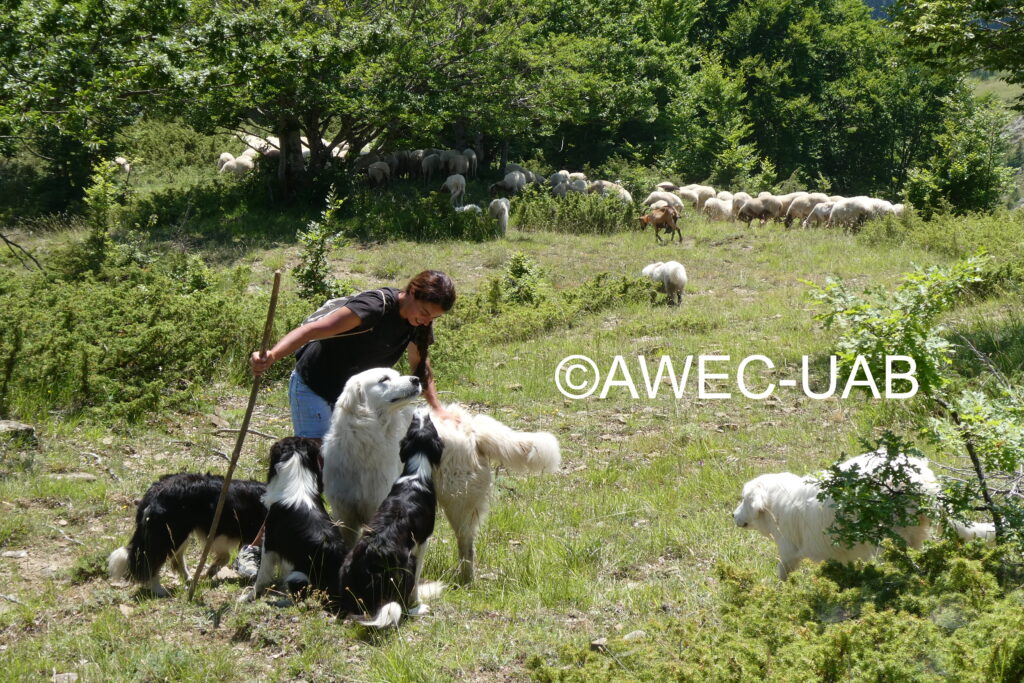
So-called “classic” training and education methods that ignore the basic behavioral needs of livestock guardian dogs (LGDs) are still promoted today. This often leads to dramatic situations – not only for the dogs themselves, but also for livestock, farmers, and shepherds. As wild predators disappeared from many regions of the world, traditional knowledge about LGDs gradually became lost, along with much of their functional genetics. During the 1970s and 1980s, many farmers began adopting LGDs breeding and training methods based on the recommendations and theories of Raymond Coppinger, a researcher from the United States. These approaches rely heavily on punishment and fear, while overlooking many of the behavioral needs of LGDs. As adults, dogs raised under these methods tend to be more insecure and overreactive towards people. This is especially conflicting in touristic areas or when the pasture lands are close to villages.
Other breeding and management approaches do exist, methods that encourage a relationship of trust between livestock guardian dogs and the people they work with. Far from being “new,” these practices are rooted in the knowledge of shepherds who live daily with their flocks and their dogs.
The following section presents some findings from field visits carried out in extensive livestock systems.
Gaining this kind of knowledge about LGD behavior and management helps identify the key factors needed to maximize the success of implementing LGDs on farms. For each flock, we weighed the benefits and challenges of working with guardian dogs, based on the reality of each farm.
Action under the 2023–2027 CAP Strategic Plan, co-funded by: